

California bullet train to cost US$20 billion
08 May 2019
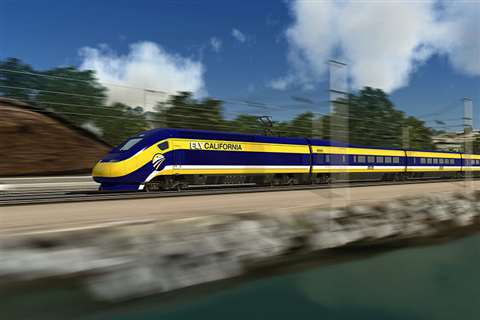
A high-speed rail project planned to be constructed in California will cost more than originally expected, with estimates increasing to more than US$20 billion dollars.
The California bullet train is set to run on a new 119-mile long section of track from Merced to Bakersfield.
Though the original plans for the entire project were scaled back, this section of line was previously estimated to cost between US$16 billion and US$18 billion.
The latest estimate now values this stage of the project at US$20.4 billion which, according to the California High-Speed Rail Authority’s report, could rise in the future depending on unforeseen circumstances.
In this new budget; US$16.3 billion has been allocated for construction of the line, US$700 million for trains; US$800 million for work on a NEPA (National Environmental Policy Act) Record of Decision, US$1.3 billion for bookend investments, and US$1.3 billion for other costs.
In total the increase from the previous worst-case valuations break down to US$477 million for cost increases, US$362 million for a wider scope of work and US$990 million for additional risk contingencies.
Before being halted by California Governor Gavin Newsome, the original project was set to deliver 800 miles of high-speed rail lines and cost somewhere in the region of US$77 billion.
Divided into two phases, the railway was originally planned to connect downtown San Francisco with Los Angeles in phase one, whilst phase two would extend the route north to Sacramento, east to Riverside and San Bernardino, and south to San Diego.


