

Fehmarnbelt Tunnel project reaches milestone

18 July 2024
All five production lines for standard tunnel elements are now in operation at the 18km long Fehmarnbelt Tunnel. When it is completed it will be the longest immersed tunnel in the world and is currently the largest infrastructure project in Northern Europe.
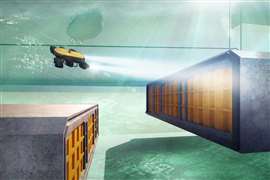
Upon its scheduled completion in 2029, the Fehmarnbelt Tunnel will link Denmark and Germany for both road and rail traffic. With a travel time of only seven minutes by train and ten minutes by car, this construction project provides a rapid rail connection between Scandinavia and Central Europe.
The immersed tunnel has a total width of 42,00m and comprises five tunnel corridors. Two of these corridors are two-lane and intended for motor vehicles, two are single-lane and intended for rail traffic and the remaining tube is a service and escape passage.
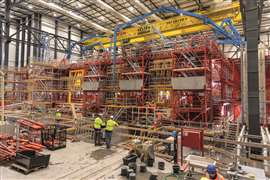
Peri supplied the formwork to produce the 79 standard tunnel elements, each 217,00m in length and weighing 73.000 tonnes.
The formwork solution for the production of the 79 standard tunnel elements is said to be characterised by high performance, productivity and compliance with high safety standards. The standard tunnel elements are manufactured in parallel on five production lines, with the latest line having commenced operations in February 2024.
The custom-made Peri Steel Formwork Solution was manufactured at the PERI plant in Weißenhorn, Germany, in Poland and Italy. The Peri solution consisted of more than 11.000 tonnes of formwork material, which was delivered to the production site by twelve ships and more than 275 trucks.


