

Flat tops propel USA towers project

15 July 2024
USA-based construction company Clayco used three STF-8041 tower cranes, supplied by Stafford Tower Cranes, on the South Pier construction project in Tempe, Arizona, USA.
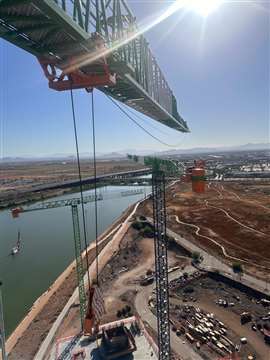 The cranes were erected to a height of 101 metres. (Photo: Stafford Tower Cranes)
The project is building 21 storey residential and commercial towers located along the bank of Tempe Town lake.
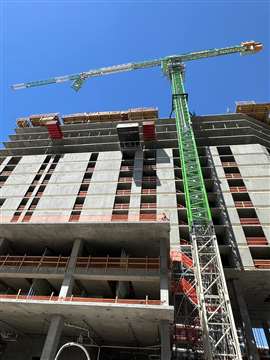 The SCG team used a Tadano AC 7.450-1 to erect the tower cranes. (Photo: Stafford Tower Cranes)
The cranes were erected to a height of 101 metres as part of phase 2 of the project, and used Stafford’s climbing frame above the single tie.
All three cranes have a 32 tonne maximum load capacity, with a tip load of 4.1 tonnes, anchored to a concrete foundation.
Crane assistance
The project’s location presented a challenge with a prominent over-swing requiring accurate zoning. Safety of the construction site was also the highest priority for all concerned, said a spokesperson for the project.
During the erection process, the Stafford Crane Group (SCG) team used its Tadano AC 7.450-1 as the assist crane.
With the crane tower foundation at the bottom of the below ground parking level, planning and coordination with the construction contractor was critically important, added the spokesperson.
All three cranes were erected in six days and the project is expected to be completed by 2026.
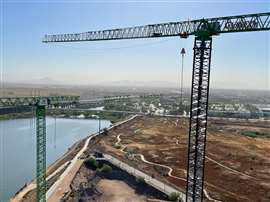 The project’s location next to a lake presented a challenge with a prominent over-swing requiring accurate zoning. (Photo: Stafford Tower Cranes)


