

Kennards survey finds construction in Australia is ‘stable’

07 August 2024
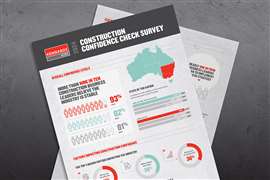 Photo: Kennards Hire
A survey carried out by Kennards Hire, one of the largest equipment rental companies in Australia, has revealed that the majority of construction business leaders see Australia’s construction industry as ‘stable.’
The third annual Construction Confidence Check survey, which tracked responses from over 410 businesses of varying sizes, found that 93% (up by 12% on 2023) of respondents believe the industry is able to withstand pressures to continue growing.
Respondents said cost-saving measures are a cause for optimism, with 37% of those surveyed revealing a shift in focus on increasing the quality of workmanship to reduce rework.
Meanwhile, 57% said their business plan includes investing in technology to manage projects more efficiently and effectively over the next 12 months.
Tony Symons, general manager, commercial at Kennards Hire, said that given an increase in investment in construction, the results are “not surprising.”
He said, “We are currently seeing unprecedented levels of construction activity in every state in Australia, and this work is expected to continue for at least the next three years.”
“Our annual Construction Confidence Check survey gives us insight into the industry and helps us anticipate trends and stay informed on the challenges facing our customers. For example, we found that on average, construction business leaders surveyed say the proportion of total lost productivity hours on their worksite due to old and faulty equipment is 28%.”
Symons added that renting equipment as opposed to buying plays a key role in ESG (environmental, social and governmental) targets for customers, with increased participation in the sharing economy and access to the latest technology some of the benefits.
In terms of sentiments surrounding ESG, the survey found that 90% of respondents either have or plan to have an ESG strategy in place.
Kennards said it found that there were three core areas in which leaders are priotitising for ESG:
- Meeting mandatory ESG requirements as a project supplier (34%)
- Collaborating with Indigenous-owned suppliers through social procurement (33%)
- Obtaining project site accreditation from the Green Building Council of Australia (33%)


