

Saudi Arabia to develop Jeddah’s historic Al Balad district into international heritage destination

09 October 2023
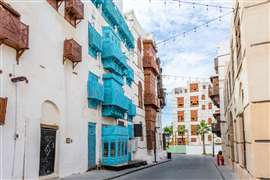 Al-Balad old town with traditional muslim houses with wooden windows and balconies, Jeddah, Saudi Arabia (Image: vadim.nefedov via AdobeStock - stock.adobe.com)
Saudi Arabia’s Public Investment Fund (PIF) has formed a new development company to develop Jeddah’s historic Al Balad district into a global heritage destination.
The Al Balad Development Company (BDC) focus on improving the district’s infrastructure, overseeing the restoration of historic buildings in Al Balad, and developing service facilities as well as recreational, residential, commercial, hotel and office spaces.
The overall project development area will comprise approximately 2.5 million square meters, with a total built up area of 3.7 million square meters. This includes 9,300 residential units, 1,800 hotel units and around 1.3 million square meters of commercial and office space.
The project is part of wider efforts led by Crown Prince Mohammed bin Salman to revitalise historic Jeddah and turn the city into an economic hub as well as a global cultural and heritage destination.
The new company will collaborate with the private sector and specialists to develop the area’s infrastructure, taking into account environmental sustainability and preserving the heritage of Historic Jeddah, which is a UNESCO World Heritage site.
It is one of a series of major projects underway in Saudi Arabia, in line with the country’s Vision 2030 plan aimed at diversifying economically and culturally.


